


10 Winter Yarn Problems Knitters Face — And How to Fix Them

Why your yarn behaves differently in cold weather, and how to keep it soft, smooth, and easy to work with.
Winter feels like the perfect season for knitting—cozy blankets, steaming tea, wool sweaters, and quiet evenings dedicated to your craft. But it’s also the time when yarn behaves the strangest. Dry air, temperature swings, heavier clothing layers, and closed-up homes create a unique set of problems that many knitters notice every year.
If you’ve ever wondered why your acrylic crackles with static, why your wool suddenly feels rough, or why your yarn pills more in winter—this guide explains everything. We’ll explore the 10 most common winter yarn problems, the science behind them, and practical fixes to help you enjoy knitting all season long.

1. Static Electricity in Yarn (Especially Acrylic)
One of the most common winter yarn frustrations is static—those little shocks, clingy strands, and yarn that sticks to everything except your needles. Acrylic is especially notorious for this because synthetic fibers hold an electrostatic charge far more easily than wool.

According to yarn-care guides from Shengrun Textile and KJS Yarn, static increases dramatically in low humidity conditions, which is exactly what winter brings. Indoor heating systems drop moisture levels in the air, causing fibers to rub together with more friction and charge up.


How it affects knitting:
Yarn clings to your hands, sleeves, and needles
Strands separate or tangle
Cakes “jump” or collapse while winding
Fixes:
Run a humidifier in your craft room (even 30–40% humidity helps).
Lightly spritz your yarn with water before knitting.
Switch to metal needles, which don’t hold static.
Avoid wearing fleece while knitting—it's a static magnet.
2. Wool Feels Dry, Rough, or “Crispy”
Have you ever touched your wool in winter and thought, “Why does this feel scratchier than usual?” That’s because wool absorbs and releases moisture from the environment, and winter air is extremely dehydrating. Textile research on wool moisture regain shows that when humidity drops, the fiber’s outer scales become stiffer, causing wool to feel rougher and less elastic.
How it affects knitting:
Yarn feels scratchy or brittle
Knitting tension becomes uneven
Finished items drape differently
Fixes:
Store yarn in breathable bags like cotton or linen.
Add a cedar block or humidity balancer to storage areas.
Soak finished knits in lanolin-rich wool wash to restore softness.
Keep a humidifier running near your yarn shelves.


3. Yarn Breakage or Weakness in Dry Weather
Low humidity doesn’t just make wool feel dry—it can actually make delicate fibers snap more easily. Hand spinners discuss this often: when the environment is dry, fibers lose the internal moisture that keeps them flexible.
This applies especially to:
Single-ply wool
Mohair
Alpaca
Loosely spun artisan yarns

How it affects knitting:
Yarn breaks when pulling from the center
Ends fray or split
Stitches may look uneven
Fixes:
Increase humidity in your work area.
Handle delicate fibers gently.
Knit from the outside of the cake if center-pull adds tension.
Warm the yarn with your hands to soften it before joining.
4. Increased Felting Risk
Felting happens when wool fibers experience heat + moisture + agitation. In winter, we often wash wool in warmer water or dry garments near heaters—both increase felting risk.
According to textile-science research shared on ResearchGate about wool fiber friction, the microscopic scales on wool interlock when these conditions combine. Winter laundry routines unintentionally create the perfect environment for this.

How it affects knitting:
Sweaters shrink
Fiber becomes dense, fuzzy, or stiff
Stitch definition disappears



Fixes:
Always wash wool in cold water.
Avoid wringing or rubbing wool.
Dry on a flat surface, far from direct heat.
Use mesh bags when machine washing even on gentle cycles.
5. Colorwork Tension Issues (Tight Floats)
While this problem is technically about hands and yarn, winter makes it far worse. Many knitters on Ravelry mention that their colorwork puckers more in winter. Why? Because cold hands tighten tension without you noticing.

How it affects knitting:
Puckered motifs
Too-tight floats
Distorted stitch shapes
Fixes:
Warm your hands before starting.
Use one needle size larger for stranded sections.
Spread stitches across the needle periodically to relax floats.
Keep a small heat pack nearby during long sessions.
6. Yarn Tangles More Easily in Winter
Between static electricity and lighter, drier fibers, yarn tangling becomes noticeably worse in winter. This includes:
Yarn flying off the cake
Center-pull collapses
Strands sticking to each other instead of feeding smoothly
Craft blogs highlight that static cling + dry air leads to friction between strands, causing unexpected knots or loops while winding.

Fixes:
Use a yarn bowl or project bag.
Wind skeins slowly and evenly.
Mist your hands lightly if the yarn keeps sticking.


7. Yarn Absorbs Odors in Closed Winter Homes
Wool especially is extremely porous. Because households stay closed up in winter, yarn easily absorbs:
Cooking smells
Fireplace smoke
Musty humidity
Pet odors
Textile studies show wool’s scale structure traps scent molecules deep inside the fiber.
Fixes:
Air yarn out in indirect sunlight for a few hours.
Store yarn in airtight bins if your home has strong smells.
Use lavender or cedar sachets to neutralize odors.
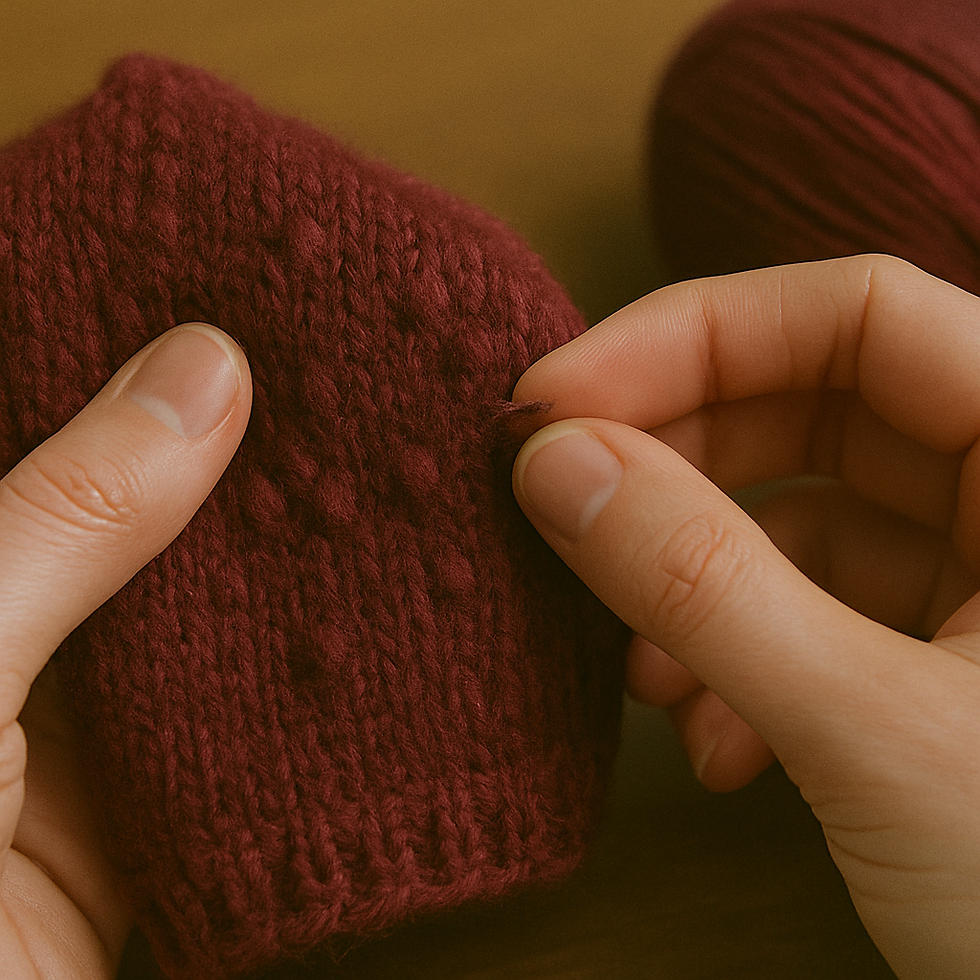
8. More Pilling on Finished Projects
Pilling increases in winter for a simple reason: we wear thick layers. Scarves rub against coats, sweaters rub against seat belts or backpacks, and hats scrape against jacket collars.
Textile abrasion research confirms that friction causes loose or short fibers to roll into pills, especially on soft wool blends, single plies, and loosely spun yarns.
Fixes:
Choose yarn labeled low pilling for winter garments.
Turn sweaters inside out before washing.
Use a sweater stone or fabric shaver to remove pills.
Avoid wearing delicate knits under rough jackets.



9. Slow Drying During Blocking
Even though winter air feels dry, indoor moisture often increases once windows are shut and heaters run. This slows evaporation, causing sweaters to take 2–3 days to dry after washing or blocking.
KnitPicks and Purl Soho both mention that slow drying is one of the most common winter frustrations for knitters.
Fixes:
Place knits on a microfiber towel to wick moisture away.
Run a fan over blocking boards.
Flip pieces once halfway through drying.
Use a dehumidifier if your home feels damp.
10. Musty Yarn Storage, Mildew, or Pests
Winter brings huge temperature swings: heated rooms + cold closets + damp basements. Textile-preservation studies show this creates ideal conditions for mildew and carpet beetles—two big enemies of natural fiber.
Signs of winter storage trouble:
Yarn smells musty
Spots of discoloration
Tiny holes in wool (carpet beetles)
Damp skeins or sticky-feeling fibers
Fixes:
Store yarn upstairs, not in basements or garages.
Use airtight bins with silica gel packets.
Add cedar blocks to deter pests.
Avoid plastic bags long-term; they trap condensation.



📚 References & Further Reading:
🧶 Blogs & Yarn-Care Guides
1. Shengrun Textile — Static in Acrylic Yarn
2. KJS Yarn — Why Yarn Gains Static in Cold Weather
🔬 Textile Science Articles
3. Wool Moisture Regain Study (Textile Research Journal)
4. Felting & Wool Fiber Friction Behavior (ResearchGate)
5. Fiber Brittleness in Low Humidity (SAGE Journals)
Final Thoughts:
Winter affects yarn just as much as it affects our bodies. Dry air, friction, heat, and restricted airflow all change how fibers behave—from static cling to pilling to weakened strands. But with small adjustments—better humidity, gentle washing, proper storage, and mindful handling—you can keep your yarn soft, smooth, strong, and ready for every cozy project.


Comments