


Beginner Knitting Mistakes in Winter — and How to Fix Them

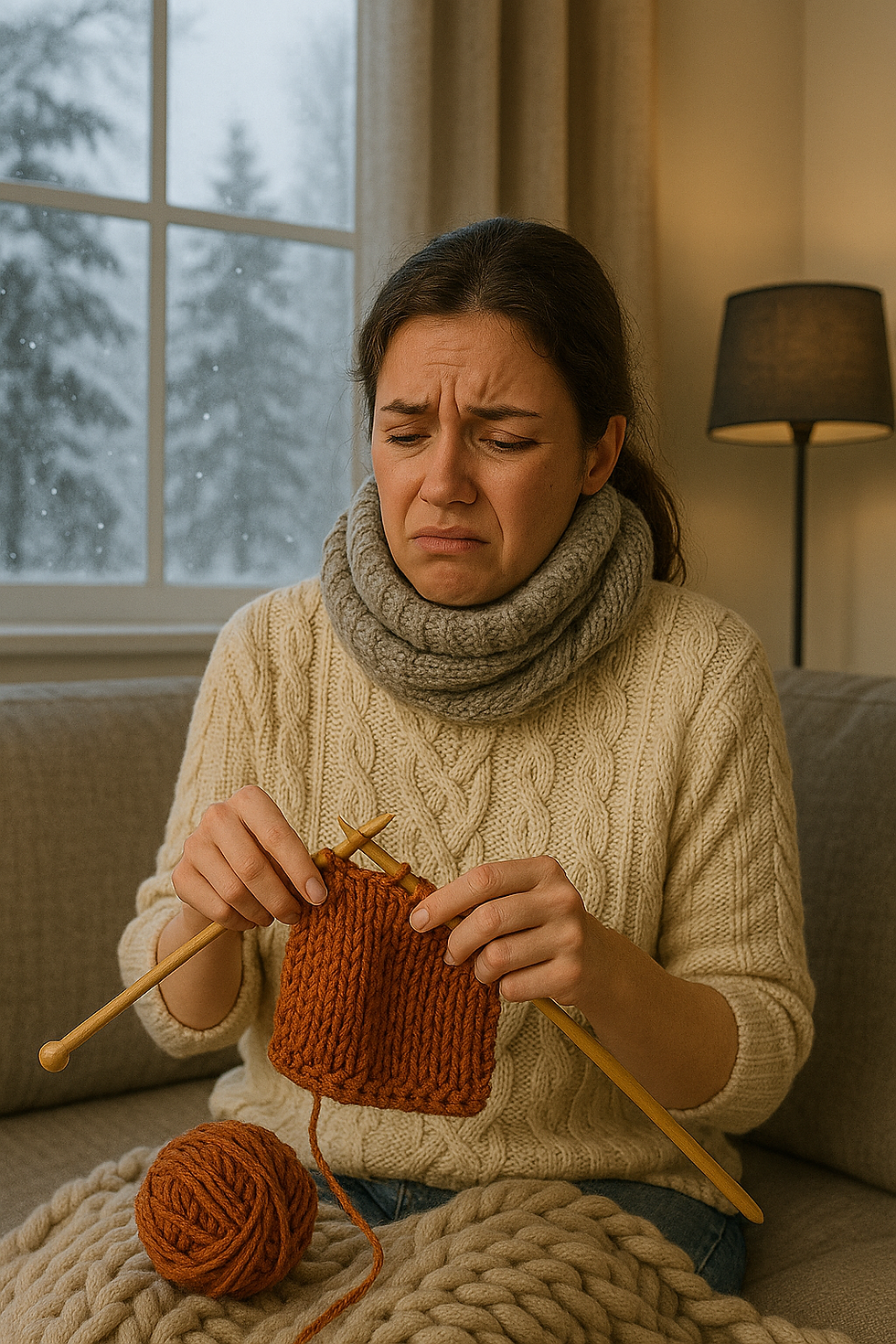
Beginner knitting mistakes in winter are incredibly common — even for people who love the cozy idea of knitting during the colder months. Warm yarn, quiet evenings, handmade gifts, and curling up indoors all sound perfect. But for many beginners, winter actually makes knitting feel harder, not easier — and the reason isn’t lack of skill.
Winter changes how knitting fits into your daily life: your routines, your energy, your environment, and even the way you choose projects. The beginner knitting mistakes in winter aren’t usually technical — they’re seasonal habits and expectations that quietly work against you.

Here are the most common beginner knitting mistakes in winter — and what to do instead.
1. Expecting Winter Knitting to Feel Effortless
Many beginners start knitting in winter because it looks cozy online. What they don’t see is the setup behind the scenes.
The mistake: Assuming you can knit anywhere, anytime, and feel comfortable.
Why it backfires: Cold, low light, and dry air make knitting more physically demanding.
What to do instead: Treat winter knitting like a planned activity, not a spontaneous one. Prepare a comfortable seat, good lighting, and warmth before you begin. Comfort comes from intention, not aesthetics.


2. Choosing Overly Complicated Projects for Winter
Winter seems like the perfect time to tackle lace, fine-gauge sweaters, or dark-color colorwork — but beginners often underestimate how winter conditions affect focus.
The mistake: Starting projects that require intense concentration during dark evenings.
Why it backfires: Low light and fatigue increase mistakes and frustration.
What to do instead: Save detailed projects for daytime knitting. Choose simpler, repetitive patterns for evenings. Winter is the season for momentum, not perfection.
3. Knitting for Long Stretches Without Adjusting Your Routine
Winter encourages long, uninterrupted knitting sessions. Beginners often power through discomfort because they think soreness is part of learning.
The mistake: Believing discomfort is normal and temporary.
Why it backfires: Pain signals get ignored, leading to strain or burnout.
What to do instead: Break knitting into shorter sessions. Stand up, stretch, and reset frequently. Learning stops when your body is overwhelmed.


4. Copying Summer Knitting Habits in Winter
Beginners often knit in winter the same way they do in warmer months.
The mistake: Using the same seating, lighting, and pace year-round.
Why it backfires: Winter conditions demand more support and recovery time.
What to do instead: Adjust your setup seasonally: better lighting, warmer seating, and more breaks. Winter knitting is slower by nature — embrace that.
5. Buying Yarn Before Understanding Winter Care
Beginners are often drawn to beautiful yarn without considering how winter affects fiber behavior.
The mistake: Buying yarn first and learning care later.
Why it backfires: Winter magnifies care mistakes — washing, drying, and storage errors become costly.
What to do instead: Before starting, ask: How will this yarn behave in winter? Choose fibers you feel confident caring for during colder months.




6. Overcommitting to Holiday Knitting
Winter gift-giving creates pressure, especially for beginners who want to prove their skills.
The mistake: Taking on too many gift projects at once.
Why it backfires: Stress replaces enjoyment, and mistakes increase under time pressure.
What to do instead: Limit handmade gifts. Choose fast, forgiving projects. Remember: a relaxed knitter produces better work than a rushed one.
7. Knitting Wherever There’s Space Instead of Creating a Setup
Beginners often knit on couches, beds, or floors because it feels cozy.
The mistake: Prioritizing coziness over support.
Why it backfires: Poor posture and low visibility compound quickly in winter.
What to do instead: Create one dedicated knitting spot with good light, back support, and a surface for tools. Winter knitting benefits from consistency.




8. Rushing to “Finish” Projects Before Caring for Them Properly
After weeks of knitting, beginners often want a project done immediately.
The mistake: Washing or drying a finished project hastily.
Why it backfires: Winter conditions increase the risk of damage during washing and drying.
What to do instead: Slow down at the finish line. Treat washing and blocking as part of the project, not an afterthought.
9. Storing Yarn Wherever There’s Room
Holiday clutter pushes yarn into basements, garages, or spare closets.
The mistake: Assuming yarn storage doesn’t matter short-term.
Why it backfires: Winter humidity swings can permanently damage yarn.
What to do instead: Store yarn in living spaces with stable temperatures. Organization is a winter skill, not just a cleaning task.
10. Thinking Mistakes Mean You’re Bad at Knitting
This is the most damaging winter mistake of all.
The mistake: Interpreting seasonal difficulty as personal failure.
Why it backfires: Confidence drops, and many beginners quit before spring.
What to do instead: Understand that winter amplifies every learning curve. Struggle doesn’t mean you lack talent — it means you’re learning under harder conditions.


Final Thoughts
Winter is not the easiest season to learn knitting — but it can be the most rewarding. Once you recognize that winter changes how knitting fits into your life, you can adjust your habits instead of blaming yourself.
The real skill beginners learn in winter isn’t speed or precision — it’s adaptation. And that skill will serve you for every season that follows.
Knitting is a long journey. Winter is just one chapter — and it doesn’t have to be the hardest one.


Comments